
Inside the World’s Hardest Supply Chains
and eight ways I'd try to improve the system

On 24 March 2022, one month after the Russian invasion, I entered Ukraine on foot from Romania at a border crossing. There was no queue to get in, but the outbound lanes were packed with people, cars, and trucks — part of the mass exodus of nearly five million individuals fleeing the conflict.
My assignment was to reach Chernivtsi in the southwest and set up the foundations of a functioning supply chain to support displaced populations. We were starting with nothing: no suppliers, no warehouses, no pre-positioned stock, no demand plans, not even pens or paper — just one hotel room left in the entire city.
This is the reality of first-phase humanitarian deployments worldwide.
In some situations, organisations may rapidly scale up through existing supply chains; in others, they may need to pivot those supply chains to new locations or different products. And in some cases — like Ukraine — the response begins from scratch, building everything from the ground up.
In all three cases, scaling up is beset by challenges that people working in other, more stable sectors would most likely go an entire career without experiencing.
I’m planning on writing a longer piece about that deployment, the incredible Ukrainian partners we worked with, and how, in just weeks, we cobbled together a solid supply chain.
But in this post, I want to focus on:
The stages of a humanitarian response
What typically gets purchased — and why
What makes a supply chain more (or less) complex
What I think the sector could do better to improve the supply chain

This New Humanitarian Article outlines 25 of the most significant 25 shock events in modern history.
1. Stages of a Humanitarian Response
I’m skipping over the detailed role of the state, first responders, the UN, and local communities, to give a high-level overview:
The heavy lifting for supply chains happens in the operational deployment and delivery phases. This is where humanitarian organisations must meet the needs of the population at scale and supply chain is the primary route to do this.
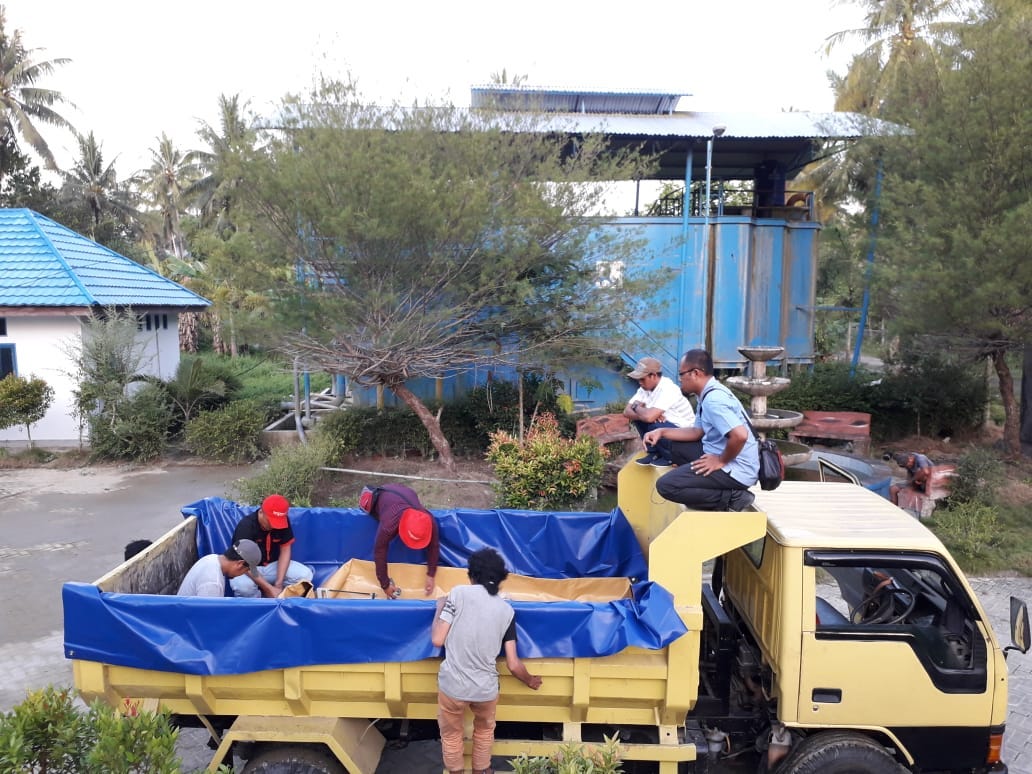
2. What goods and services are purchased during humanitarian responses?
In humanitarian response, different studies estimate that between 60% and 80% of every dollar is spent through the supply chain.
Put another way, if a response costs $100 million, then $60–80 million will flow through procurement, logistics, warehousing, fleet, and related supply-chain functions to meet the needs of the affected population.
I’m always surprised by how often people are surprised by this: meeting basic needs—whether for your own family in everyday life or for whole communities in crisis—comes down to supply chain. You determine what’s needed, find the best way to source it, purchase it, receive it, and store it.
In humanitarian response, it’s the same principle on a larger scale. Addressing needs such as safe water, food, shelter, or education almost always involves purchasing goods or services and ensuring they’re delivered safely and effectively.
Yet almost every month, I meet someone who’s astonished by the scope of supply chain work in humanitarian settings. I’ve lost count of how many times I’ve heard, “I never realised you’d be responsible for all that.”
Population Need - and what goods and services support that need
Essential Needs in Humanitarian Response
Safe Water & Sanitation
Bottled water
Purification tablets
Water trucking & pipes
Borehole rehabilitation
Food & Nutrition
Ready-to-use therapeutic food (RUTF)
General food parcels
Fortified foods
Shelter & Protection
Tents and tarpaulins
Plastic sheeting
Blankets and household kits
Transitional shelters
Health & Medical Care
Medicines and first aid kits
Trauma care supplies
Vaccination campaigns
Mobile clinics
Deployment of medical staff
Sanitation & Hygiene
Latrines and handwashing stations
Soap
Menstrual hygiene kits
Waste management/disposal systems
Hygiene kits
Education (especially for children)
Temporary learning spaces
“School-in-a-box” kits
Teachers and facilitators
Psychosocial support
and to support all that supply chain need to arrange warehouse facilities, trucks or vans or 4x4s, generators, sat-phones, and then simpler things like laptops, office furniture to make a response a reality.
Then there is the simple challenge of getting things from the supplier to the people that need it…
3. What Makes Humanitarian Supply Chains More (or Less) Complex
In protracted crises, supply chains are already established. While they remain complex and vulnerable to shocks or escalations, they typically benefit from an existing supplier base, logistics infrastructure, and systems that help keep operations functioning.
By contrast, new emergencies often require building a supply chain entirely from scratch—under immense pressure and in extremely challenging conditions.
Several factors can determine whether a response is more straightforward or significantly more difficult.
Can an existing supply chain meet the needs of this new response?
If yes - the issue is limited to how much the supply chain needs to scale - it could be 100% or 1000% but the skeleton of the response is there already.
If no - then you are dealing with the biggest challenge you will face professionally
Does the Government allow imports?
If allowed: helpful when local markets can’t supply critical goods.
If blocked: everything must be sourced locally — often from strained or damaged markets.
Are local suppliers available and under contract?
If yes: orders can be processed immediately.
If no: supply market assessments, tenders, waivers, and contracting delay the start.
Do you have available warehousing facilities?
If available: distribution can start quickly, but facilities may need to be expanded or adapted.
If not available: organisations must secure and fit out new premises fast.
Is the country’s physical infrastructure damaged?
If undamaged: goods can flow freely
If damaged: alternate routes may be needed, smaller trucks or different modalities
Are many organisations competing for the same resources?
If competition: can lead to price gouging, stock outs, lack of infrastructure
If no competition: suppliers can be confused about the sector and struggle to adapt to ways of working
In the Ukraine case I mentioned in the introduction, the government allowed imports. There were no local suppliers available (this is in the immediate aftermath, the private sector recovered later to meet humanitarian needs) or nearby suppliers set up, no warehouse facilities, no damage to local infrastructure, and a large amount of growing competition for procurement.
Humanitarian supply chain professionals work in environments that are volatile, uncertain, and often dangerous.
If you don’t work in the sector then imagine organising a family event but..
- You don’t know the location.
- You don’t know how many guests are coming.
- You don’t know how long they’ll stay.
- The venue might be in a war zone or a disaster-hit town.
- You have to provide not just food, but all their needs: shelter, health, education, water.
- You don’t know which suppliers are still operating.
- You don’t know how much budget you’ll have — or for how long.
- And if you get it wrong, lives may be at stake.
That’s the reality of humanitarian supply chain work.
How Would I Improve Humanitarian Supply Chains?
I spent over a decade as a management consultant, helping global corporations such as Honda, Coca-Cola, and Adidas improve their supply chains. But nothing compares to the challenges faced in the humanitarian sector. These challenges are structural, contextual, geographic, financial, and human in nature. Fixing them isn’t about grand solutions — it’s about inching forward, quarter by quarter, year by year.
Here’s what I would prioritise (standard caveat: these are my personal views, not those of my employer).
1. Prioritise Local Procurement
International procurement should be prohibited across the UN/Red Cross/INGO system unless local markets are either broken or unable to meet quality requirements.
Research shows the “double-impact” of buying locally: affected people receive the goods, and the local economy benefits from the purchase. Local procurement is usually quicker, cheaper, and more sustainable. Yet we still see goods shipped from China to central warehouses, only to be shipped back to Asia when disaster strikes — even where strong local markets exist.
2. Stop Technical Experts From Over-Specifying Products
Clusters exist to harmonise standards so recipients get consistent products and services. But when international experts define specifications without engaging local suppliers, the result is often that only international products qualify.
Instead, specifications should be based on local market surveys, shaped by what’s available, affordable, and accepted in-country. This would open supply chains to more competition and make aid both faster and cheaper.
3. Partner Seriously With the Private Logistics Sector
Global forwarders, shipping lines, and logistics companies already run incredible pro bono projects. With structured, consolidated engagement across the humanitarian sector, logistics costs for aid delivery could be reduced dramatically — potentially to zero. Given the scale of the private sector, this is an underused opportunity.
4. Share Price Data Publicly
Humanitarian actors need a mechanism to share price data on key goods and services. Transparent benchmarks would help responders spot inflated rates, negotiate fairly, and limit corruption — particularly in fragile markets where competition is limited. Local businesses should not profiteer from humanitarian needs.
5. Shift From Pre-Positioning to Anticipatory Action
Pre-positioning (pre-po) only makes sense for recurring, predictable events — for example, when the same weather pattern consistently affects the same community. Broader pre-positioning is rarely cost-effective: it mostly serves as good PR for first responders, while scale-up still has to happen afterwards.
A better approach is anticipatory action: using forecasts, early warning systems, and pre-agreed triggers to move money, supplies, and contracts just before a crisis hits. I’ll expand on this in a future post.
6. Scale Up Cash Transfers
Wherever possible, cash should replace goods. Cash allows people to buy what they need, when they need it, while supporting local markets. Agencies should establish pre-arranged cash transfer frameworks with financial service providers — and stress-test them through joint exercises to ensure rapid scale-up in emergencies.
7. Digitise the Last Mile
The last mile remains the hardest part of humanitarian supply chains. Agencies should invest in digital tools that allow communities to send “pull signals” directly, while enabling real-time tracking of distributions.
There are isolated examples today (often in health supply chains), but the sector lacks a unified, end-to-end solution. Building one would transform accountability and effectiveness.
8. Strengthen Collaboration Bodies
Collaboration platforms like the Global Logistics Cluster, Fleet Forum, IAPG, Hulo, and many local coordination groups are critical. Their mandates, funding, and strategies matter greatly — as does how they work together.
After seven years in this sector, I see a lot of talking about collaboration, but too few examples of genuine, aligned action. Strengthening these bodies could unlock far more collective impact. This is another one I will go into in more detail in another post.
That’s my list. None is a silver bullet. But taken together, they’re steps that could make humanitarian supply chains faster, fairer, and more effective for the people who depend on them.
If you've made it this far, I’m really grateful. This is my first-ever post under the Friday Dispatch project. I’m planning to write these weekly for a year before deciding whether to continue.
If you found this useful, interesting, provocative or worth sharing, then my call to action for you would be: like the content on Substack and LinkedIn, share it with a friend or a network, leave me a comment on how to improve it.
Until next Friday!
Very interesting read, Jamie. Many thanks! I am certainly taking notes and looking forward to the next one!
Really well laid out explanation and thought provoking ideas for transformation.